Get In Touch
By - Raghav Daksh
11/7/2025
46
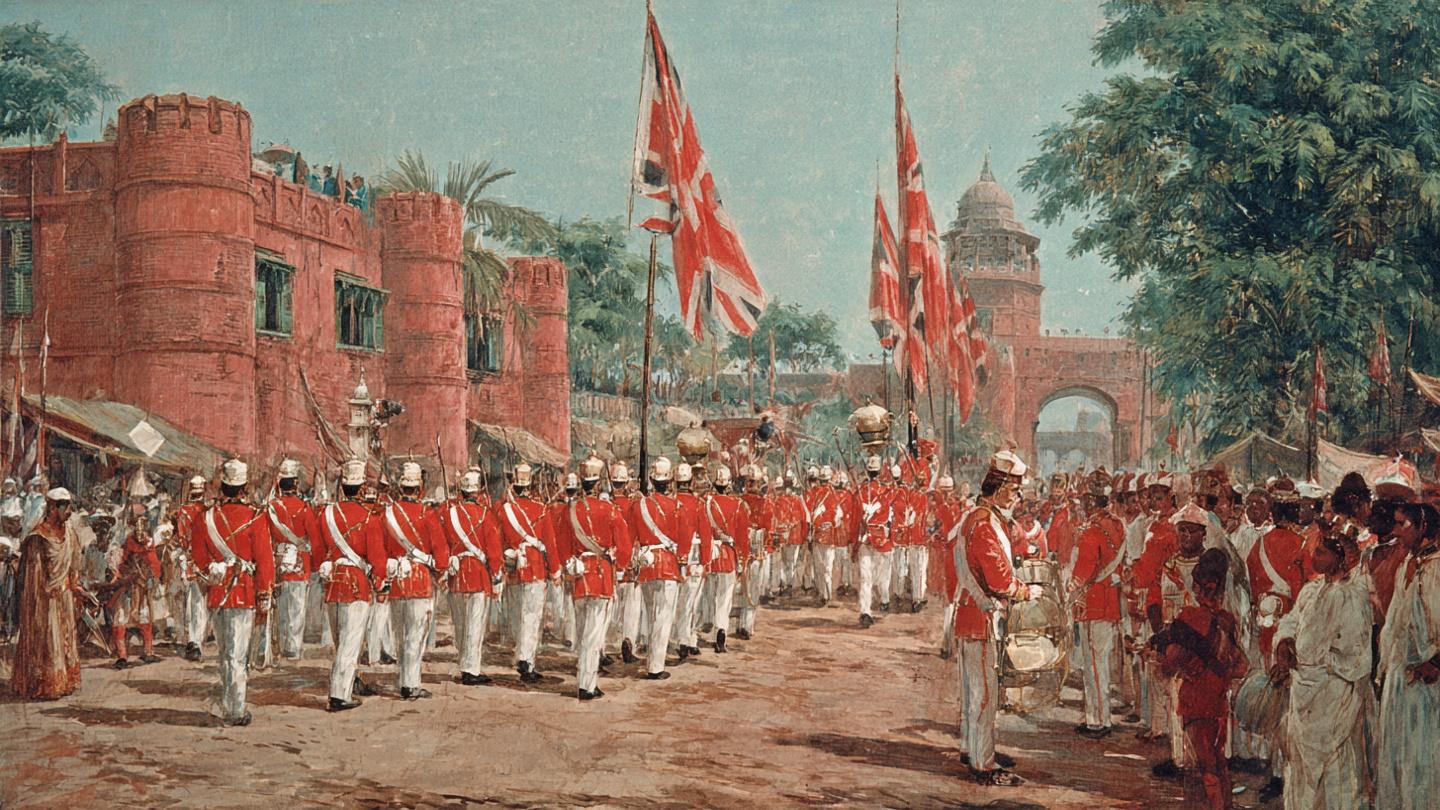
The British East India Company (EIC), founded in 1600 for Asian trade, soon became much more than just a trading venture in India. Starting with trading posts in Surat, Madras (Chennai), Bombay (Mumbai), and Calcutta (Kolkata), it slowly gained military and political power, dramatically influencing Indian history and society.

Early on, the EIC sought permission from Mughal emperors to open trading factories, eventually defeating rival European powers to dominate Indian trade. The turning point was the Battle of Plassey (1757), which enabled EIC’s revenue collection rights in Bengal, Bihar, and Orissa. These “Diwani Rights” made the Company a major political power.
| Year | Event |
|---|---|
| 1600 | EIC founded with a royal charter |
| 1613 | First permanent factory in Surat |
| 1757 | Battle of Plassey, start of Company rule |
| 1765 | Rights to collect revenue in Bengal |
| 1857 | Sepoy Mutiny, Company rule ends |
| 1858 | Beginning of British Raj |
The EIC created a new administrative system, including laws like the Regulating Act (1773) and the Cornwallis Code, setting the groundwork for modern Indian bureaucracy and courts.
Indian rulers lost power, and traditional systems were replaced with British-style governance.

The Company changed India’s economy, often to benefit Britain: Indian industries like textiles suffered as British imports increased, and forced cash crops led to famines and loss of livelihoods.
New transport systems (railways, roads), postal services, and English-medium schools were introduced.
The EIC promoted English education to create a class of Indians “English in taste, morals, and intellect”.
Missionaries, enabled by new laws, set up schools and hospitals, affecting Indian society and culture.
Indians resisted EIC policies, especially those that disrupted traditions or livelihoods (e.g., famines, land annexations).
The Sepoy Mutiny of 1857, a widespread revolt by Indian soldiers, ended Company rule and led to direct British government control.

Q: What was the main purpose of the British East India Company in India?
A: Trade was the original goal, but the Company soon started governing territories and collecting revenue.
Q: How did the East India Company change Indian education?
A: By promoting English and Western subjects, creating a new Indian middle class.
Q: When did the British government take over from the East India Company?
A: After the Revolt of 1857, with the Government of India Act, 1858
Check out our other posts!
British Rule & India’s Farm Shift
14
- Raghav Daksh
From Food Security to Cash Crops: The Lasting Impact of British Rule on Indian Farmers.

Diversity - The Heartbeat of India
26
- Raghav Daksh
Why is India Called Bharat?
20
- Raghav Daksh
British & Indian Farming
41
- Raghav Daksh

 +91 7389453300
 @paathshala.app
 +91 7389453300